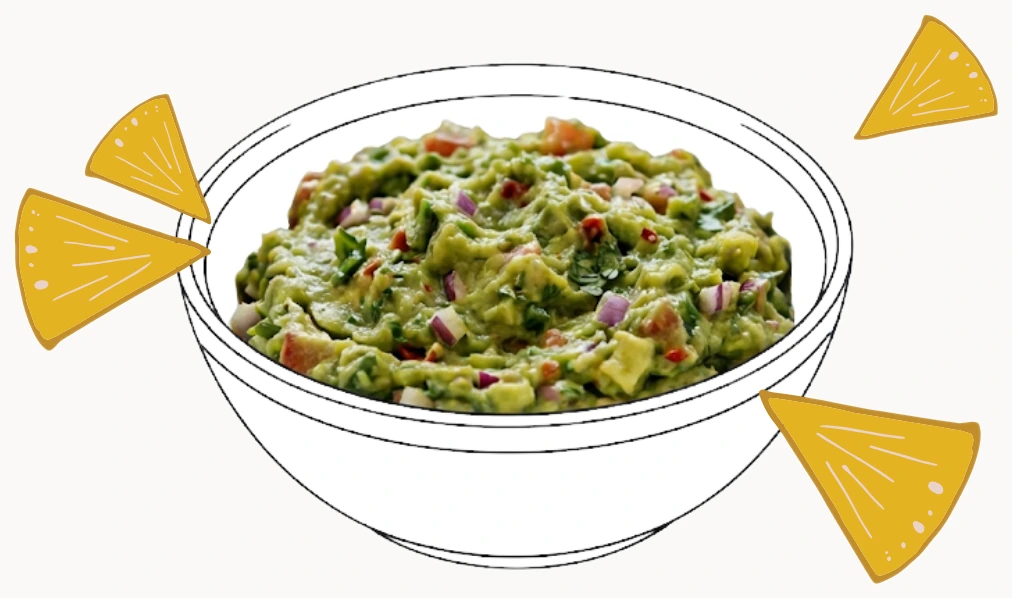
A Quick Bite
Yes. Guacamole is mostly avocado with tomato, onion, lime, and cilantro stirred in, so you're getting fiber and heart-healthy fat. The only ingredient doing any real harm is salt, and the only thing to watch is how much you eat.
Chips and guacamole have to be one of the most underrated "junk food" snacks.
That creamy, garlicky tang is the reason why I have a monthly Chipotle guac budget.
You know how we like to complain that healthy food doesn't taste good? Well, guac would like a word.
Guac is the GOAT because it actually is a healthy food that tastes good.
Is Guacamole Good For You?
Yes! Guacamole is good for you. If you think about it, guac is mostly made up of veggies and fruits. Technically the only unhealthy-ish ingredient is salt.
Traditional guac is made with:
- avocado
- onion
- jalapeño pepper
- lime juice
- cilantro
- salt/pepper
(Optional)
- tomatoes
- garlic
That's it, really.
The only problem is avocados have a lot of fat in them. Healthy fat, but fat nonetheless.
You have to watch how much you eat.
Guacamole Nutrition Facts
| Nutrient | Standard Serving (2 tbsp) | Large Serving (1/4 cup) |
|---|---|---|
| Calories | ~45–50 kcal | ~90–100 kcal |
| Healthy Fats | 4 g (mostly monounsaturated) | 8 g (mostly monounsaturated) |
| Dietary Fiber | 2 g | 4 g |
| Sodium | 75–120 mg (varies by salt added) | 150–240 mg |
FUNFACT
Avocados have more potassium than bananas!
5 Top Health Benefits of Eating Guacamole
1. ♥-Healthy Fats
1 medium avocado = 21 to 22 grams of TOTAL fat.
That fat breaks down into healthy and unhealthy fats i.e.
• Total Fat: ~21.5 g
♥ Monounsaturated Fat: ~13.5 g
♥ Polyunsaturated Fat: ~2.7 g
• Saturated Fat: ~3.0 g
The ♥-Healthy Fats
Monounsaturated fat: The majority of the fat in avocados is monounsaturated fat. It's extremely heart-healthy. It can actually help lower "bad" LDL cholesterol while maintaining "good" HDL cholesterol.
Polyunsaturated fat: These are healthy fats (like omega-6 and omega-3 fatty acids). Your body needs them for brain function and cell growth, and luckily, whole foods like avocados, nuts, and seeds have a lot of fatty acids in them.
2. Digestive-Friendly Fiber
A whole avocado has about 10 grams of fiber. That fiber does 2 things:
1 It slows down your digestion (which is why guac holds down your appetite between meals).
Think of fiber like chia seeds. When it hits your system, it absorbs all the water and becomes like a gel.
So instead of water rushing food through your digestive system, fiber creates a thick, chia pudding-like gel that slowly carries it through.
2 Acts as a prebiotic, aka food for the good bacteria in your gut. They use that food as fuel to help them defend your gut lining.
3. Essential Vitamins and Minerals
Avocado alone is a superfood. But when you combine it with other vegetables to make guacamole, it skyrockets in nutrition.
Avocado adds
+ potassium
+ folate
+ vitamin K
+ B6
Tomato adds
+ lycopene
Lime juice adds
+ vitamin C
Onion and garlic add
+ antioxidants.
Each ingredient in guacamole brings something to the nutrition table.
4. Rich in Antioxidants for Eye and Skin Health

Avocados are packed with antioxidants like lutein and zeaxanthin. They're specialized plant pigments that kind of pool in the back of your eye. They absorb high-energy blue light from screens and sunlight and zap away free radicals to keep your eyes healthy with age.
The tomatoes, lime juice, and garlic have antioxidants, too. They act like backup to protect your skin in the same way.
5. Supports Nutrient Absorption
Vitamins A, D, E, and K in guacamole are fat-soluble, which means they can only be absorbed by eating them with fat. Without fat to bind to, most of those vitamins would just pass through your stool.
Luckily the avocados in guacamole have enough fat to get the job done. In other words, you can extract more nutrients out of your veggies by eating them with avocado in a bowl of guac, than you would eating them alone.
Is Guacamole Good for Weight Loss?
Guacamole gets a pretty bad rep for being fattening, but would you believe me if I told you it can actually help with weight loss?
It sounds like some kind of magic trick but it isn't. And actually, the "how" is pretty boring and predictable.
It's moderation. (again 🙄).
Yeah, I know, moderation isn't fun. But the truth is, you can eat guacamole every single day,
… if you do it in moderation.
What is Moderation?
For the average adult, a moderate size portion of guacamole is about ¼ cup. BUT you have to be mindful about what you eat it with.
Think about it: an order of fried tortilla chips and guacamole will run you about 700 to 1,000 calories.
You know how many of those calories are actually from the guacamole? Maybe 200 of them. The chips are the problem, here.
Basically,


Which is Better for You? Homemade or Store-Bought Guacamole
Homemade is usually better for you than store-bought. A lot of times, store-bought guac is loaded with:
- preservatives
- oils
- excess sodium
- filler
Homemade is not.
That alone is enough to qualify homemade as healthier. But homemade guac can be unhealthy, too. Usually when you eat it with unhealthy things, like:
- fried tortilla chips
- deep-fried appetizers (taquitos, flautas, chimichangas, etc…)
- white flour tortillas
- snack crackers
- commercial french fries
Healthy Ways To Incorporate Guacamole Into Your Diet
I love guacamole. You can do a lot with it. I mostly eat it with tortilla chips, but I also like to:
- spread it on a turkey burger
- smear it on sourdough toast
- dip raw vegetables in it
- add a dollop to taco salad
- put a scoop on turkey chili
When you're out buying a deli sandwich, ask for guacamole instead of mayo. It's healthier, adds more flavor, and you really can't tell the difference.
FAQ
Is guacamole keto?
Yes. It's high in fat and very low in net carbs, which is why it shows up in almost every keto recipe. It's one of the easier foods on that diet to keep in rotation.
Why does my guacamole turn brown? Is it still safe?
Brown guacamole is an oxidation thing, not a spoilage thing. The top layer reacts with air and changes color. It tastes a little flat, but it's safe to eat. Pressing plastic wrap directly against the surface, or squeezing extra lime on top, slows it way down.
Can I eat guacamole every day?
Yes, as long as the portion is sane. Daily avocado is one of the more consistently recommended habits in regular nutrition guidance. The thing to watch is not frequency, it's what you're eating it with.
Is guacamole good for you?
Yes. It's mostly avocado, so you're getting fiber, monounsaturated fat, potassium, folate, and vitamin K in one bowl. The part that can work against you isn't the guacamole, it's the portion and what you scoop it with.
Does guacamole have a lot of calories?
Not really. A 2-tablespoon serving is about 45 to 50 calories, and a ¼ cup is about 90 to 100. The calories climb fast once chips, a restaurant portion, and a basket of tortillas enter the picture.
Is guacamole good for your gut?
The fiber in avocado feeds the good bacteria in your gut, so yes, it helps on that front. The catch is that guacamole is high in fat, so a huge portion on an empty stomach can sit heavy for some people. Normal servings are fine.
How long does homemade guacamole last?
About 1 to 2 days in the fridge. Press plastic wrap directly onto the surface so no air touches it, squeeze a little extra lime on top, and keep it cold. Brown on top means it oxidized, not that it went bad.